
For many travelers, visiting an onsen is one of the most memorable parts of a trip to Japan. An onsen is more than simply a place to take a bath: it is a way to slow down, relax, and experience the atmosphere of the place you are visiting.
Japanese onsens come in many forms. You may stay overnight at a ryokan or hotel with large shared baths, enjoy an open-air bath surrounded by nature, reserve a private bath, or visit a day-use hot spring without staying overnight.
This guide explains the main types of onsen in Japan, how they are used, and what first-time visitors should know before bathing.
What Is an Onsen?

An onsen is a bath that uses naturally occurring hot spring water. Japan has around 3,000 hot spring areas, from famous resort towns to small mountain villages where people have bathed for generations.
For visitors, the word “onsen” can describe both the water itself and the bathing experience. The experience may be simple and practical, or it may be part of a longer stay with meals, scenery, and time to relax.
Onsen and Other Japanese Baths
Not every Japanese bath uses natural hot spring water. A sento, for example, is a public bathhouse. Many sento use heated tap water, although some also use natural hot spring water.
Similarly, not every bath at a ryokan or hotel uses natural hot spring water. Some accommodations have large shared baths supplied with heated tap water or otherwise prepared water.
It is also useful to remember that the words describing a bath do not always mean the same thing. “Private” describes who can use the bath, while “open-air” describes whether it is outdoors. Neither word alone confirms whether the bath uses natural hot spring water.
Two Ways to Enjoy Onsen: Staying Overnight or Visiting for the Day
Before choosing a particular type of bath, it helps to decide how you would like to enjoy an onsen. The biggest distinction is between staying overnight at a ryokan or hotel and visiting an onsen for the day.
Staying at a Ryokan or Hotel
An overnight stay lets you enjoy the baths at a relaxed pace as part of your accommodation. Many onsen ryokans and hotels have large shared baths, and some also offer open-air baths, private baths, or guest rooms with their own baths.
Because you are staying at the property, you can often bathe more than once: before dinner, after dinner, or early in the morning. The exact bathing hours and facilities vary from one accommodation to another.
Day-Use Onsen
You do not always need to stay overnight to enjoy an onsen. Day-use facilities and some ryokans allow visitors to use their baths for a few hours.
A day visit can be a good choice if you are traveling by car, exploring an onsen town, or simply want to take a break during the day. However, the available baths, opening hours, fees, and towel arrangements can differ considerably from those for staying guests, so always check in advance.
Types of Onsen Baths You May Find
Once you have decided whether to stay overnight or visit for the day, you can look at the different kinds of baths available. A single ryokan may offer several of the following styles.
Large Shared Baths (Usually Separated by Gender)
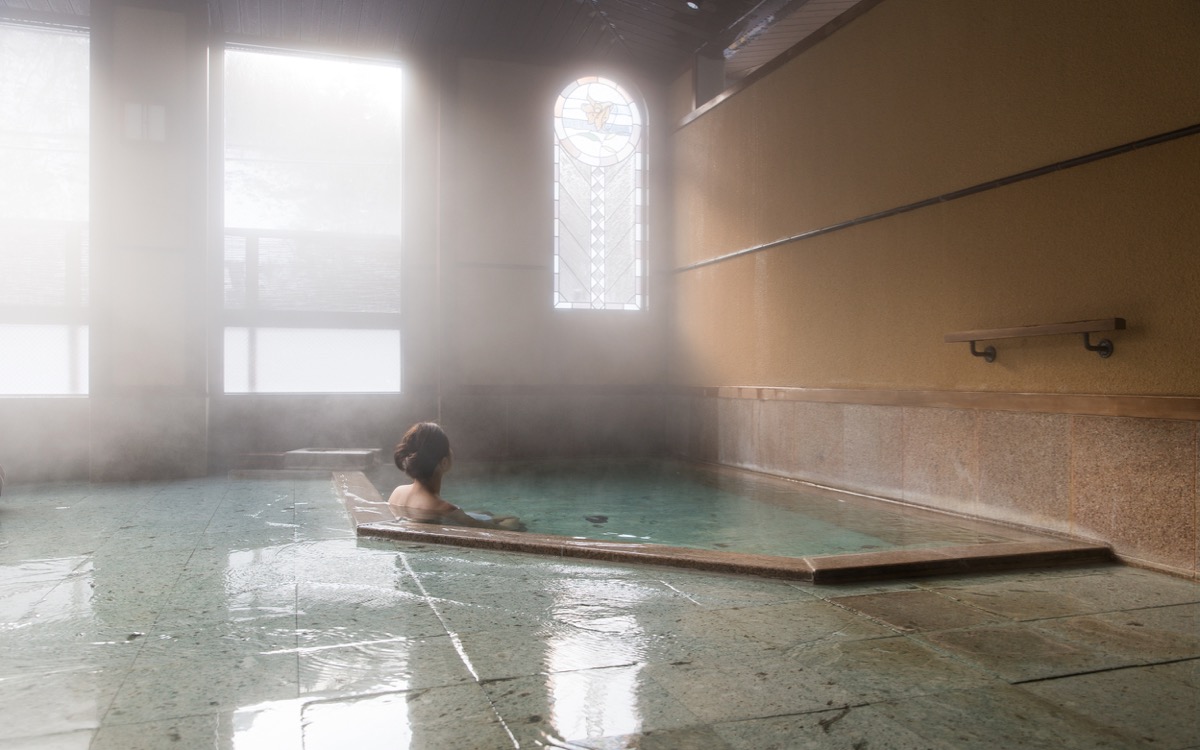
Large shared baths, usually separated by gender, are the most familiar style of onsen in Japan. Guests wash themselves first, then soak in the same hot spring water as other bathers.
For many people, this is an essential part of the traditional onsen experience. The baths are often spacious and may include both indoor and outdoor areas. If you are new to Japanese onsen, the shared setting can feel unfamiliar at first, but it becomes easier once you understand the basic etiquette.
Open-Air Baths (Rotenburo)
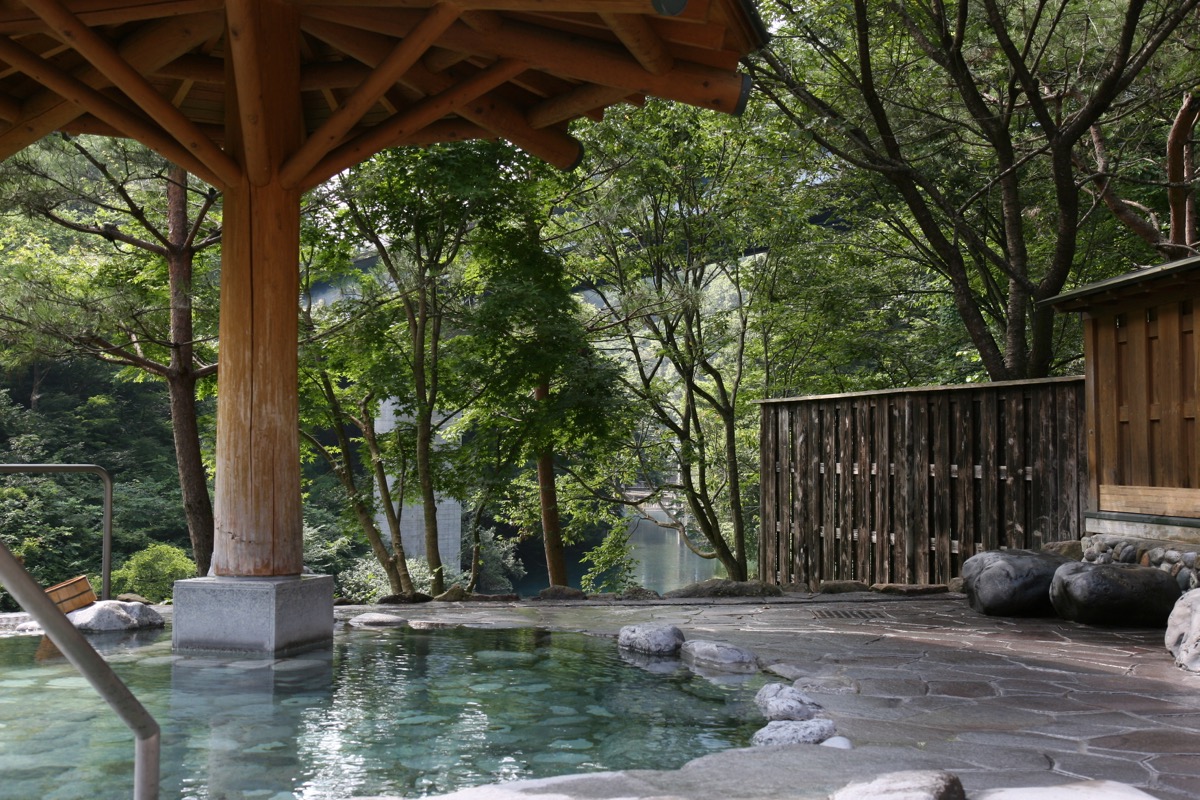
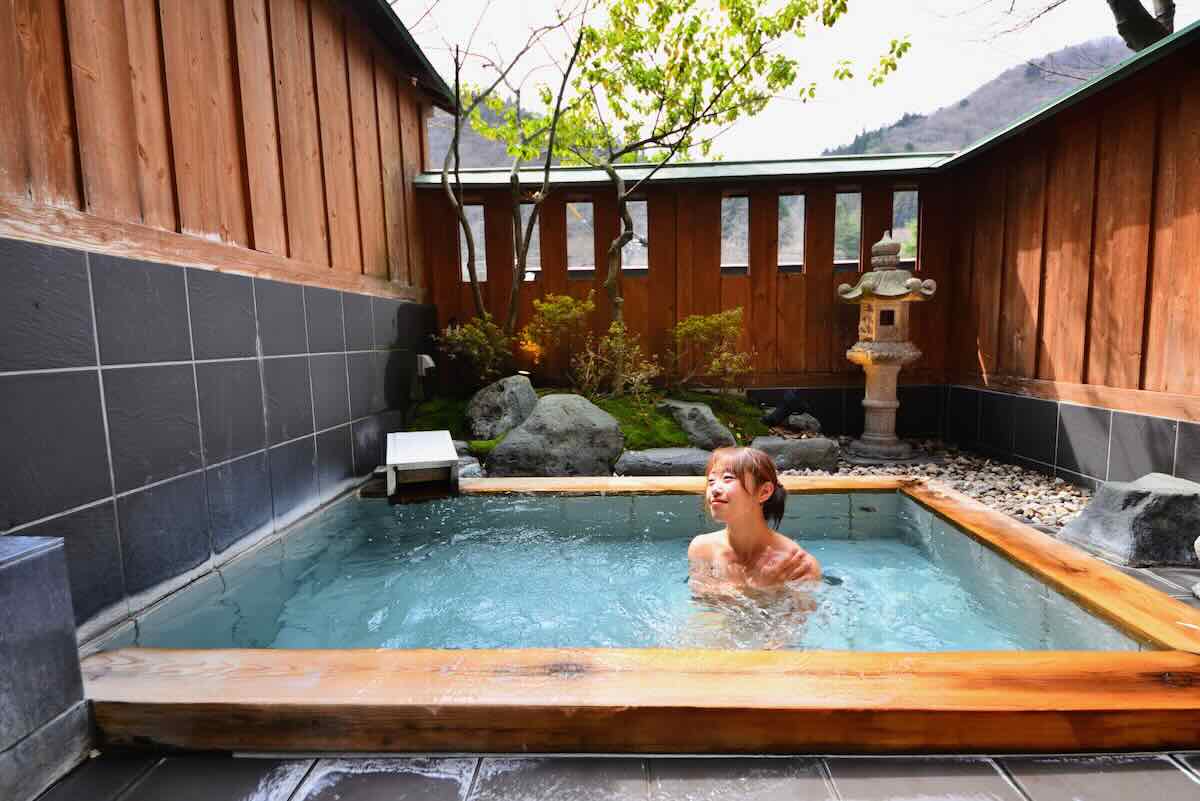
An open-air bath, called a rotenburo, is a bath located outdoors. It is often connected to a large shared bathing area, but it can also be in a separate location. Some accommodations offer private open-air baths that can be used exclusively by one party at a time.
Open-air baths are loved for the feeling of fresh air and connection with the seasons. The scenery may include a garden, river, forest, or night sky. If you are visiting Japan, experiencing an open-air bath is something I would strongly recommend—it is one of the most memorable ways to enjoy an onsen stay.
Remember that “open-air” describes the design of the bath, not whether it is private or whether it uses hot spring water. Check the details of the particular facility if these points matter to you.
Private Onsen and Guest Rooms with Private Baths
Private onsens and guest rooms with private baths are most commonly found at overnight accommodations such as ryokans and hotels. However, some day-use onsen facilities also offer private baths that can be reserved or used exclusively by one group at a time.
A private onsen lets you bathe without sharing the bath with other guests. It may be a bath that you reserve for a set time, a first-come, first-served bath that you lock from inside, or a bath attached to your guest room.
Private baths are especially popular with couples, families, first-time onsen visitors, and travelers who prefer more privacy. However, their size, location, fee, and reservation rules differ widely from one property to another.
Mixed-Gender Baths (Konyoku)
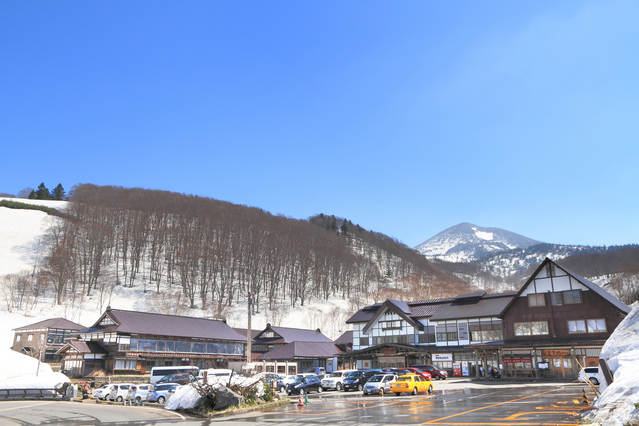
A mixed-gender bath is called konyoku. This was once a more common part of Japanese hot spring culture, especially in rural areas where baths were built close to natural hot spring sources.
Today, mixed-gender baths are less common, and rules vary greatly. Some have women-only hours or require bathers to use towels or bathing garments. Others follow more traditional rules. Check the current policy carefully before visiting.

Mixed-gender open-air baths can offer an especially dramatic sense of nature and space. They are not for everyone, but they remain an interesting part of Japan’s diverse onsen culture.
Onsen Etiquette: What First-Time Visitors Should Know
Onsen etiquette is simple once you know the basics. The most important idea is to keep the shared bath water clean and to respect the comfort of other guests.
Before Entering the Bath
In most Japanese onsens, you bathe without swimwear. Remove your clothes in the changing room and bring only a small towel into the bathing area if the facility allows it.
Wash Before Soaking
Wash your body at the shower or washing area before entering the hot spring water. The bath is for soaking and relaxing, not for washing yourself.
Towels, Phones, and Other Basics
Keep towels, phones, and other personal items out of the bath water. Speak quietly and avoid splashing, so that everyone can relax.
Tattoos at Japanese Onsen
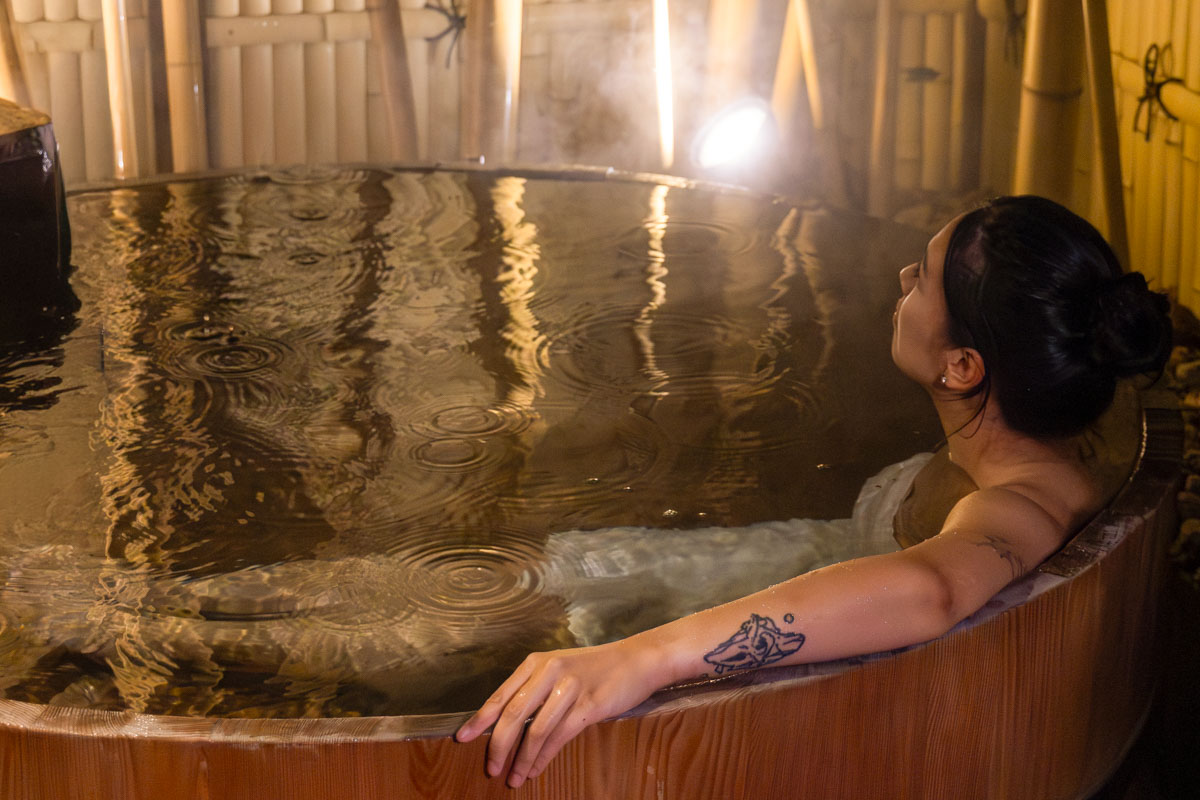
Tattoo policies vary from one facility to another. Some onsens welcome tattoos, some ask that they be covered, and others do not allow them in shared baths. Always check the current policy before visiting.
Beyond the Bath: Other Ways to Enjoy Onsen
Onsen towns often offer more than bathing. These smaller experiences can be an enjoyable part of a walk around town or a stay at a ryokan.
Foot Baths
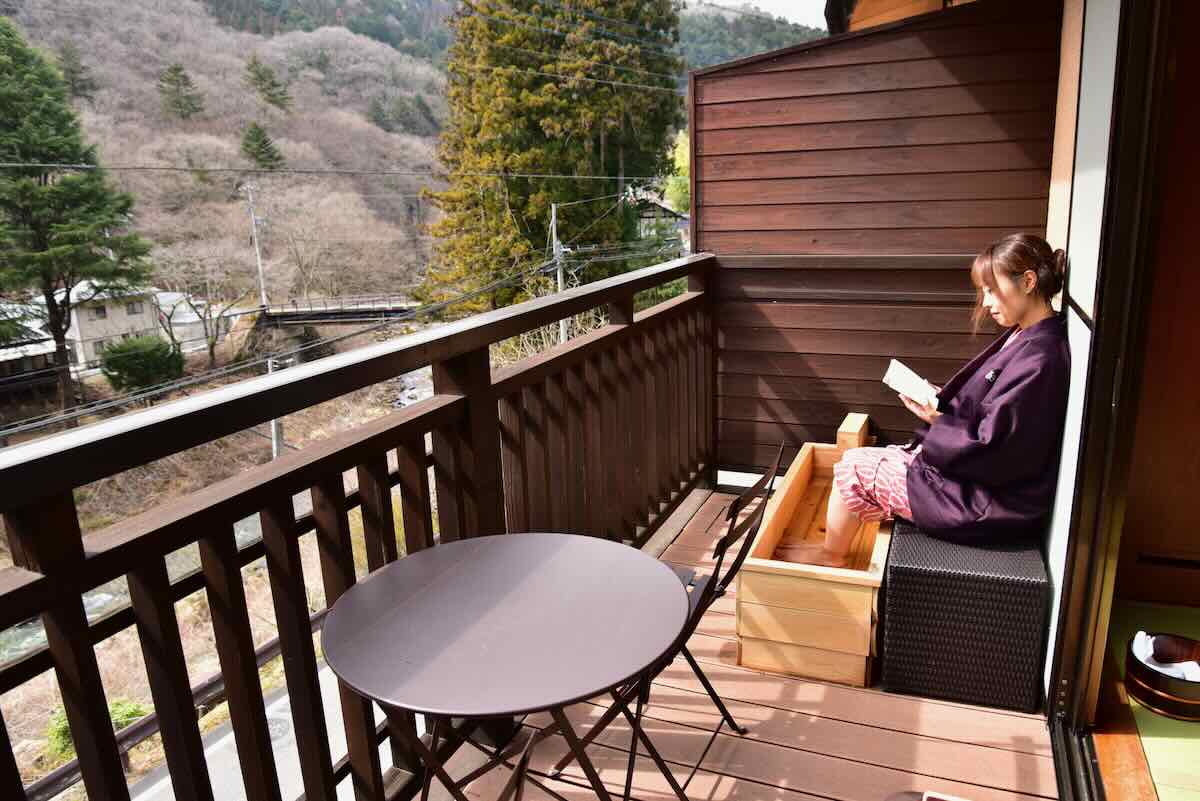
A foot bath lets you soak your feet in hot spring water while remaining fully clothed. You may find public foot baths in an onsen town, or a private foot bath at a ryokan. They are a relaxed way to enjoy the water without taking a full bath.
Drinkable Hot Spring Water and Other Facilities
Some onsen towns have springs where visitors can drink hot spring water. Only drink water where it is clearly marked as safe for drinking, and follow the local instructions.
You may also find steam baths, mist baths, walking trails, cafés, and small shops that make an onsen town enjoyable even when you are not in the bath.

Enjoying Onsen at Kashiwaya Ryokan
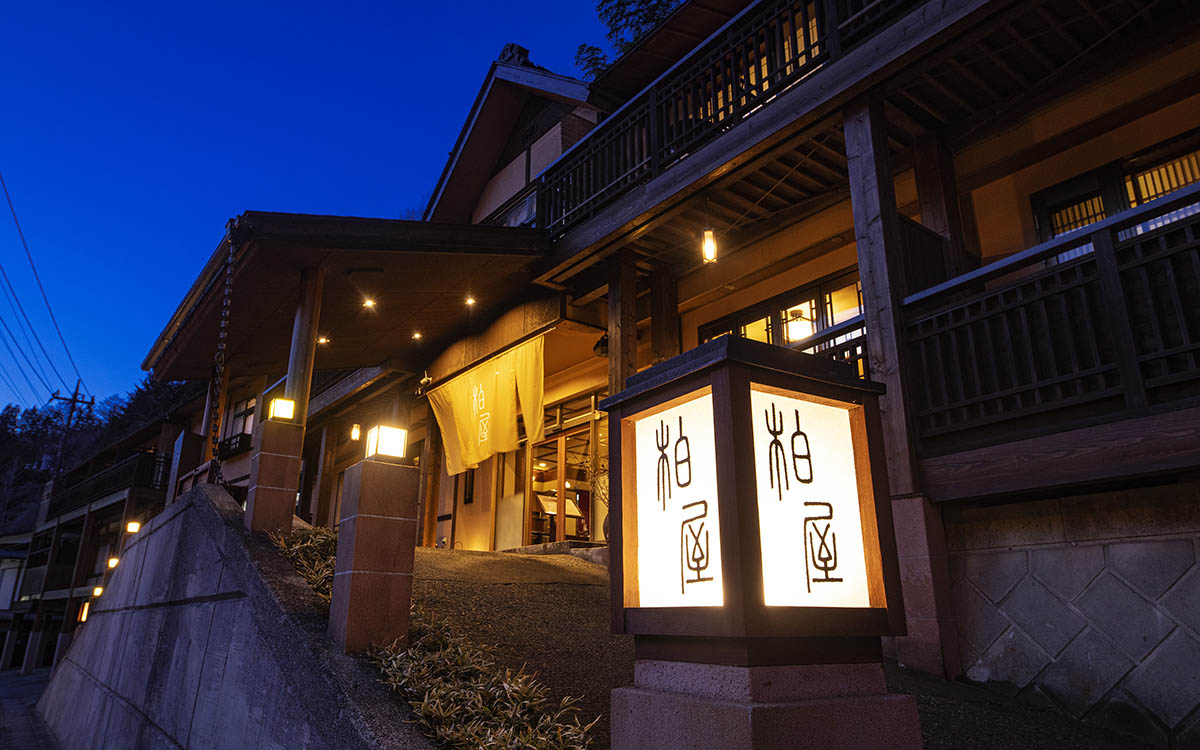
At Kashiwaya Ryokan in Shima Onsen, staying guests can experience both the shared and private sides of Japanese onsen culture.
Large Shared Baths and Private Open-Air Baths
We have large shared baths separated by gender, as well as three private open-air baths: Tsuki-no-Yu, Sakura-no-Yu, and Kaede-no-Yu. The private baths are free for staying guests and can be used whenever they are vacant, except during late-night closing hours.
All of our baths are tattoo-friendly. For a closer look at the private baths and how they work, visit our private onsen guide.
Rooms with Private Open-Air Baths
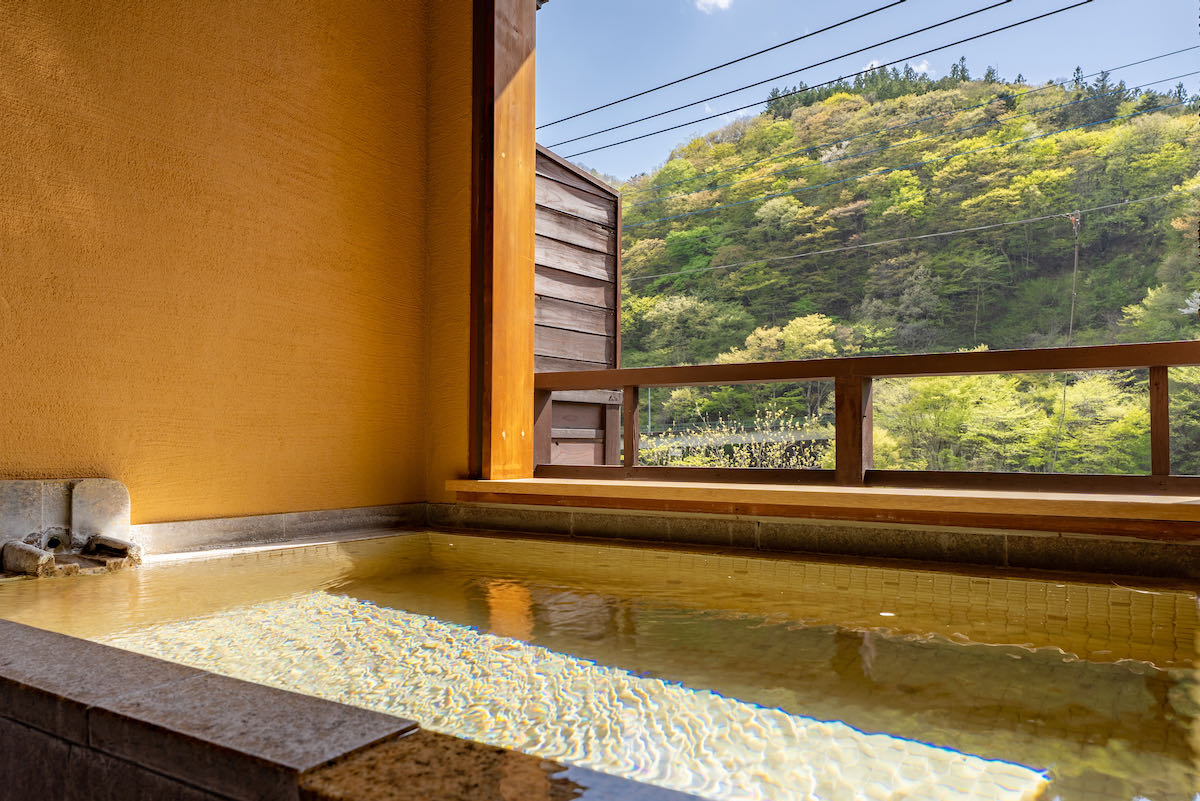
Our HANA and KAME guest rooms each have their own private open-air bath. These rooms offer a particularly private way to enjoy Shima Onsen’s natural hot spring water at your own pace.
A Guest Room with a Private Foot Bath
For a different way to enjoy the hot spring, our Japanese-style room Hikari has a private terrace with its own flowing hot spring foot bath. From the terrace, you can relax while looking out over the Shima Onsen valley and its changing seasonal scenery.
Start Your Onsen Experience in Japan
There is no single right way to enjoy an onsen. You may prefer a large shared bath, the openness of an outdoor bath, the privacy of a reserved bath, or a short day-use visit during your travels.
Once you understand the differences between these experiences and the basic rules of onsen etiquette, you can choose the style that feels most comfortable and make the most of your time in Japan.
Interested in a Japanese-style onsen stay?
Shima Onsen Kashiwaya Ryokan >
Comments